The Evolution and Mechanics of Speech
On the Value of Speech
The ability to communicate effectively is perhaps the most important skill a person can develop. In the information age, it isn't uncommon for a person to communicate with thousands of people a day through mass media. Our emotional well-being seems, at a fundamental level, to be influenced by our peers and by the relationships we form. These relationships form the basis of our identity and self-image. Connecting with others may be as important to our vitality as food, water, or shelter.
While information sits at the center of our modern culture, words have in another sense lost their value. Mass media has radically altered society, offering up a hyper-abundance of information. It's difficult to conceptualize humanity and culture separately from written word and media. For the vast majority of human history, however, we depended wholly on spoken word for communication. When civilization was at its relative infancy exchanging ideas with a person meant meeting face to face and speaking. Language as we know it today is a direct descendant of oral tradition which extends deep into remote prehistory. For these early people, the ability to speak and understand others effectively often meant life or death.
The Mechanics of Speech
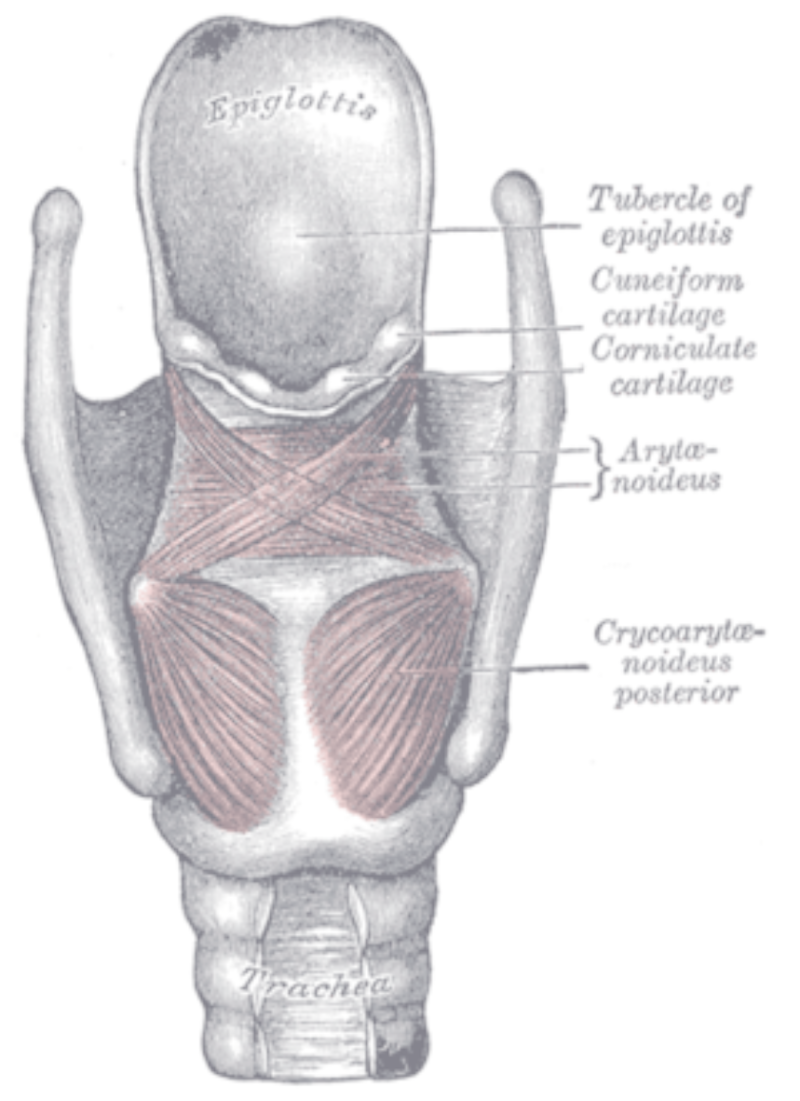
Human voice is produced through strategic manipulation of the vocal tract. The vocal tract is a resonant cavity beginning at the lips, and extending to the vocal chords. The tract is roughly "divided" in half by the tongue. Simply put, the diaphragm in the chest forces air upward through the windpipe and into the larynx. The larynx is a series of cartilages affixed to the hyoid bone in the throat. The hyoid is a floating bone attached to the top of the windpipe. The larynx is capable of contacting the vocal folds at the top of the windpipe, altering the sound of the air as it passes into the vocal tract.[i]
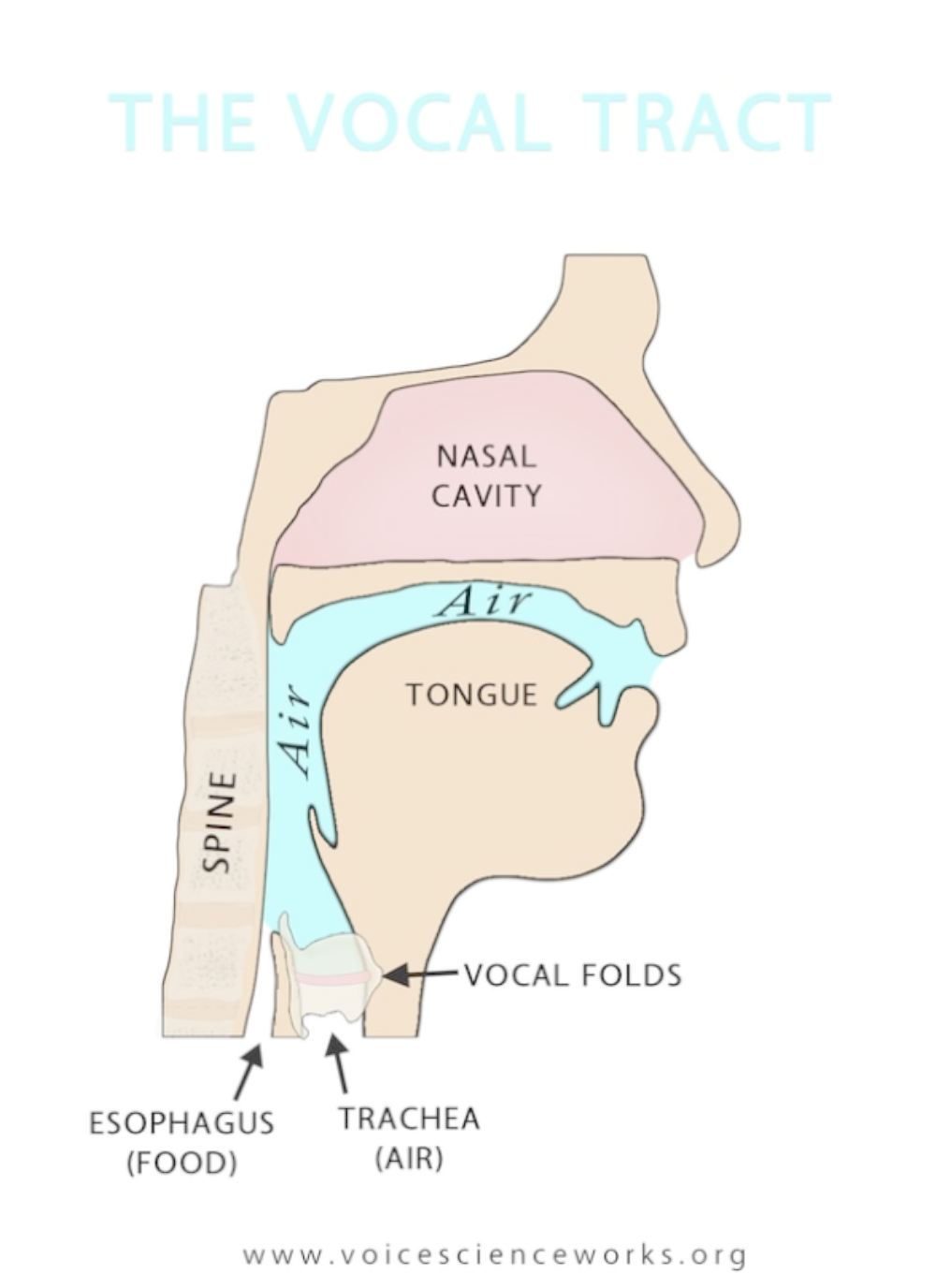
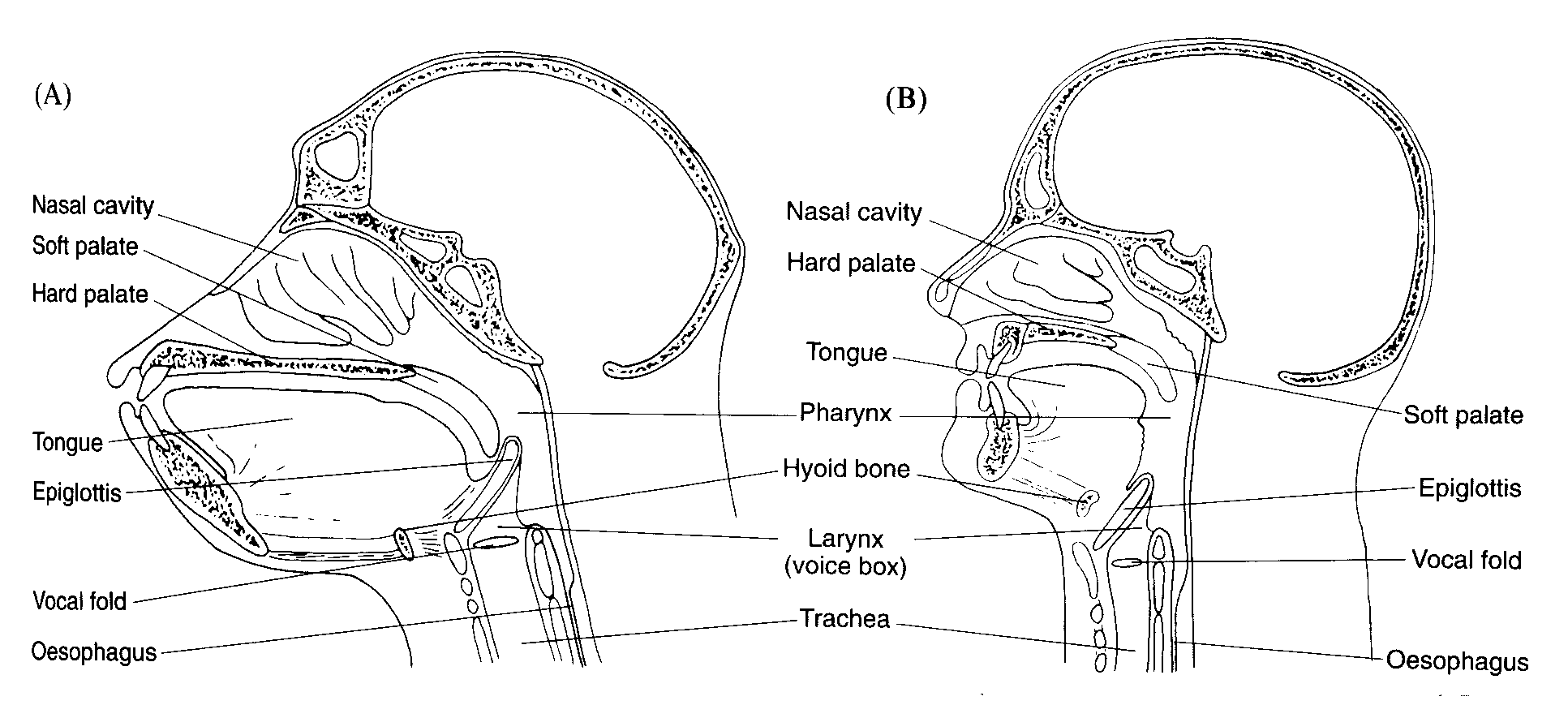
As the air passes into the vocal tract it enters the cavity behind the tongue, called the pharynx, more commonly called the throat. The size of the throat can be increased and decreased through swallowing. Swallowing constricts the neck and throat muscles, causing the larynx and windpipe to be shifted up, and closed off allowing food into the esophagus and preventing it from passing into the windpipe.[i]
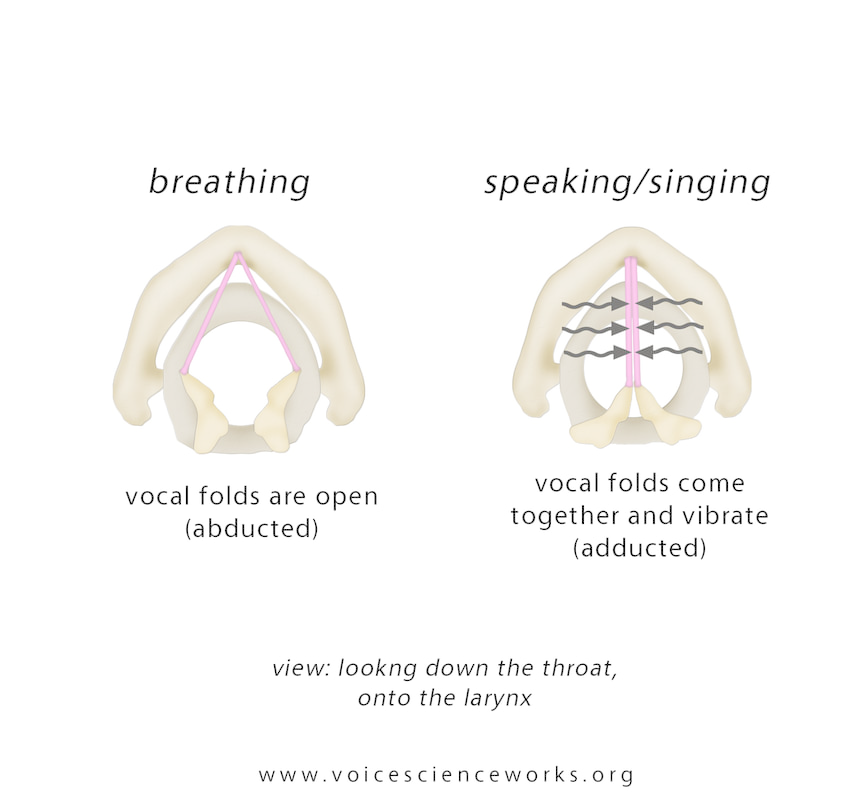
Beyond the pharynx, air may pass into the nasal tract or continue into the vocal tract. Here, by manipulating the soft pallete on the roof of the mouth, sound can be strategically shaped as needed. As it leaves the mouth, the lips are responsible for rounding off the sound by widening or narrowing the resonant cavity. Along its path at practically every stage, the tone of the sound is altered by the tongue which in most cases works to direct air in any desired direction.[i]
The Evolution of Vocalization
The mechanism of the vocal tract isn't uniquely human. The larynx itself is an evolutionary descendant of gills in fish.[i] The separation in the throat between the esophagus and windpipe was first accomplished by the lungfish, an early species of fish which developed the ability to breathe air as a consequence of the selective pressure exerted by marshlands. Marshlands frequently dry up, causing many fish to become stranded on land. The lungfish cleverly overcame its environment as a result of random mutation.[i] Over the course of milenia, this adaptation facilitated the evolution of mammals and other permenantly land dwelling animals.
Along its evolutionary path, the larynx takes on a wide range of structural adaptations, depending on the animal. In almost every case however, the larynx is incapable of producing sound and is strictly adapted for facilitating breathing (especially in reptiles). For these unfortunate creatures, vocal expression is impossible. In several species, producing sound is possible, albeit limited to the dynamic range allotted through manipulation of the cartilege in the larynx. Vocalization as we know it develops in as a consequence of the vocal folds (vocal chords) which is almost exclusively found in mammals.[i]
The larynx and vocal chords alone cannot account for human vocalization as compared to our mammalian or great ape ancestors. The next dramatic advance is the descent of the larynx. In primates and most other mammals, the larynx and hyoid are attached to the base of the tongue. While the vocal tract is in a resting position, the epiglottis wedges itself directly into the nasal passage behind the soft pallete forming a "seal" between the nostrils and the windpipe, directly to the lungs. In humans, and debateably some of our most recent great ape ancestors, the larynx and hyoid drop with age. Infants are born with an ascended larynx but as they emerge into early childhood, the larynx descends markedly - especially so in males. The consequence of this detachment is that the section of the vocal tract behind the tongue grows dramatically. The change amounts to an enormous increase in the dynamic range of vocalization, along with a drop in pitch (most noticeable in males).[i]
WIth a descended larynx and vocal folds, humans can produce a unique set of distinct sounds which we refer to as "vowels". Without this adaptation, open vowels sounds are difficult to discern from one another and presumably difficult to reliably produce. Many theories about the evolutionary advantages of a descended larynx have been proposed. With a lower vocal range, humans sound larger to predators. Additionally, because of the complexity of speech output, the voice of an individual is easily recognizeable - like a fingerprint. Humans also leverage breathe inhalation to expand portions of the body by locking the throat after a deep inhale providing greatly increased strength - the tongue and throat muscles are some of the most powerful throughout the body.[i]
The Dawn of Man
At this late stage in our development, the advantages of an increased vocal capacity are self-evident. Speech made a difference. It's extremely difficult to examine the trajectory from the violent unintelligeable cries of early primate into the voice we now call language. Very much debate surrounds the topic. Whether language developed organically as the gradual accumulation of reflexive vocalizations shared among individuals into vocabulary, or whether early languages were the result of an organized and systematic effort - no one knows. The challenge of reconstructing early language systems is that it seems to be the antecedent to any available form of material artifact or remains by necessity. Few testimonies exist of its origins. The most reliable strategy seems to involve a comparative analysis of language systems separated spatially or temporally in an attempt to "bridge the gap" into the past.
At any rate, language succeeded. As the human population grew, homo sapien began speading outward in every direction away from Africa. Migrations occurred in large "waves" over thousands of years. Certain regions provided an ideal environment along their migratory path, particularly around modern day Mesopotamia and the Mediterranean. Humans began settling permenantly around the world. Civilization and culture seem to be the direct product of permenant settlement, however the rate at which these emerge varies dramatically by region. Soon, language which may have originated as a single shared vocabularly (Mother Tongue Hypothesis) among humans begun fracturing. Variation in dialect by region becomes so great that humans can no longer understand words originating from outside their culture - not dissimilar from the mythological collapse of the "Tower of Babel". Most scholars agree that the evolution of language throughout history has been a continuous branching outward. In short: As the human population migrated outward and away from Africa spatially, so too did our spoken language begin to deviate in proportion to our geographical separation.