A Brief History of the Everything
Climate on Earth
The Earth is always in one of two climatological states; an icehouse (or an ice age) or a greenhouse climate. A so called "greenhouse climate" is simply one where there isn't any place on Earth which is permenantly frozen or "glaciated". An icehouse is the opposite - so long as at least one region is home to permenant glaciation year round, the Earth is in an icehouse.ⅠThe last time Earth was in a greenhouse climate was around 34 MYE (million years before present).ⅡSince then, Earth has been in what's termed the "Late Cenozoic Ice Age".
A glacier is a snow deposit that manages to stay frozen year round. In nearly every case, they begin to form on mountaintops. Glaciers are subject to what's commonly referred to as "positive feedback".ⅢIf permanent snow manages to get a foothold it quickly becomes compacted into ice. The surrounding enviroment is cooled at a steady rate. Glaciers expand in time. Over very long periods, glaciers are best conceptualized not as a single region or object, but as the sum of all areas frozen within a complex system of glaciers. In addition to the semi-permenantly frozen areas, many sub-systems are subject to temporary freezing as a result of the glacier which may otherwise remain above freezing outside their influence.
As glaciation gathers momentum in an ice age, whole continents or oceans may freeze over entirely. In an ice age, cooling of the planet will generally continue to grow and spread until the Earth's climate reaches a tipping due to the greenhouse effect. The point of reversal may occur at an arbitrary stage within a glacial period or may only occur after the entire surface of Earth is glaciated as it has in the past. After an extended period, historically over the span over hundreds of millions of years, freezing produces an Earth climate so dry and dusty that the atmospheric greenhouse effect outweighs the cooling of glaciated areas. Incoming sunlight is reflected very strongly by ice. Reflected sunlight gets trapped by the dust in the atmosphere and bounced back to Earth, producing a kind of "oven".ⅣAt the tipping point, more heat is generated due to the greenhouse effect than by the direct sunlight itself - at this point an ice age come to an end. The planet's climate is always teetering back and forth as a result of these basic mechanisms of glaciation and the greenhouse effect - tipping too far in either direction is cataclysmic. Just as runaway glaciation can result in global glaciation, the greenhouse effect is capable of heating the planet far beyond the habitable range. A prime example of the potential outcome of the runaway greenhouse effect on a planet can be observed on Venus, whose surface temperature is 872 degrees farenheit, regardless of season.Ⅴ
Within an ice age Earth climate is subject to recurring cycles of glaciation (stadials) and de-glaciation (interstadials).ⅦDe-glaciation within an ice age is simply a period where many or all of the peripheral glaciers and ice are melted. What constitutes "de-glaciation" is subject to interpretation. Recalling that many subsystems of glaciers may exist simultaneously across the Earth, it's often the case that a small geographical area experiences de-glaciation while the rest of the glacier system stays intact. De-glaciation on Earth generally occurs as a consequence of periodic changes in the orbital motions of the Earth about the Sun.
Milankovitch Cycles
The Earth revolves about its axis producing day and night. While it spins Earth orbits the sun annually, giving rise to the progression of the seasons. These familiar patterns are subject to a series of periodic changes. These motions, termed the "Milankovitch Cycles", alter the climate of Earth in a dramatic and decisive fashion.[ⅶ]Together they effectively define the greater context which night, day, and the progression of the seasons throughout the year occur in.
Eccentricity
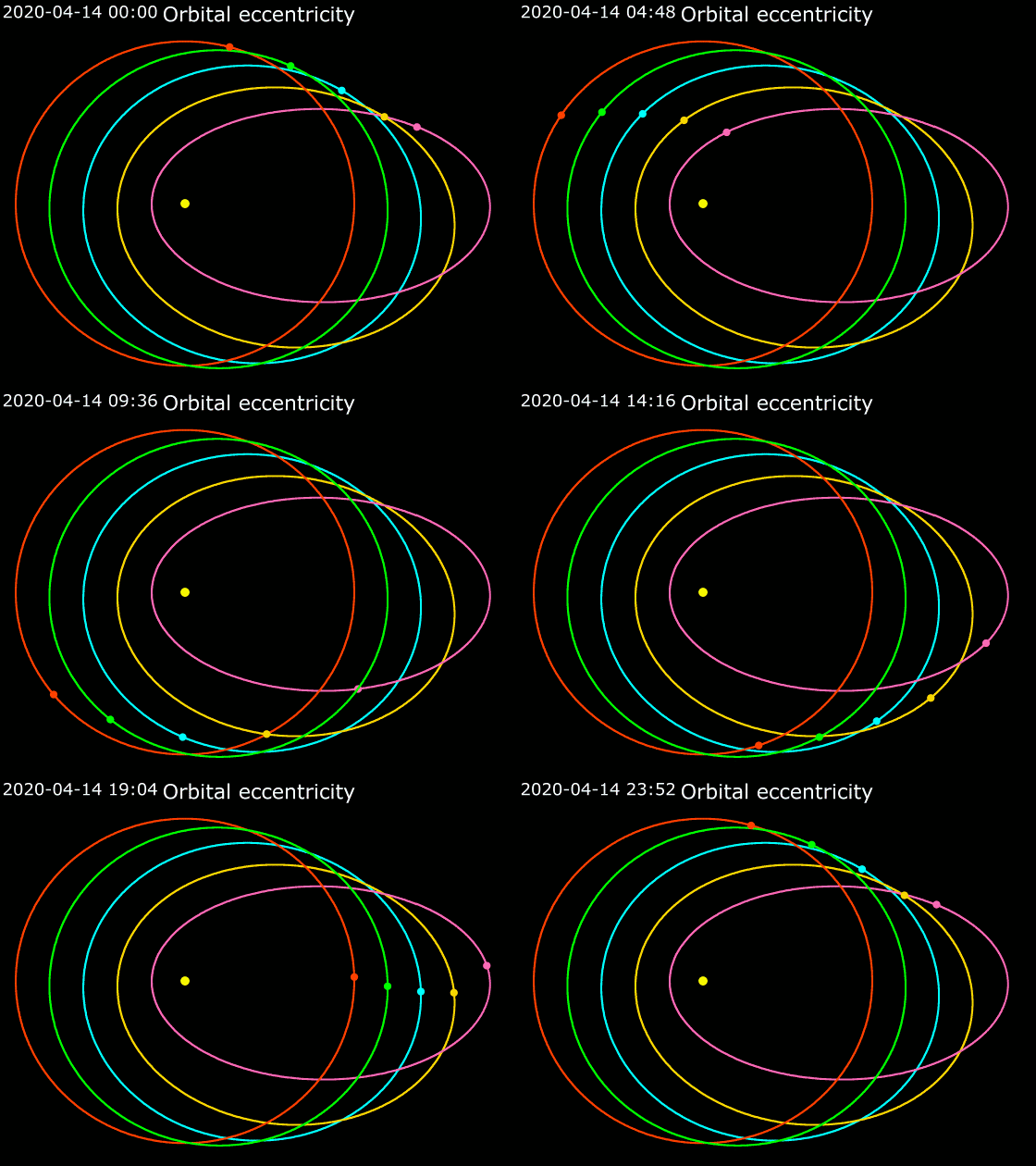
One of the most decisive orbital motions is the degree of eccentricity of Earth in its yearly path about the Sun. The change occurs because of Earth's gravitational intersection with other planets in the solar system - primarily Jupiter and Saturn. Increasing eccentricity means more extreme variation in the temperature difference between seasons. [ⅸ]
Obliquity
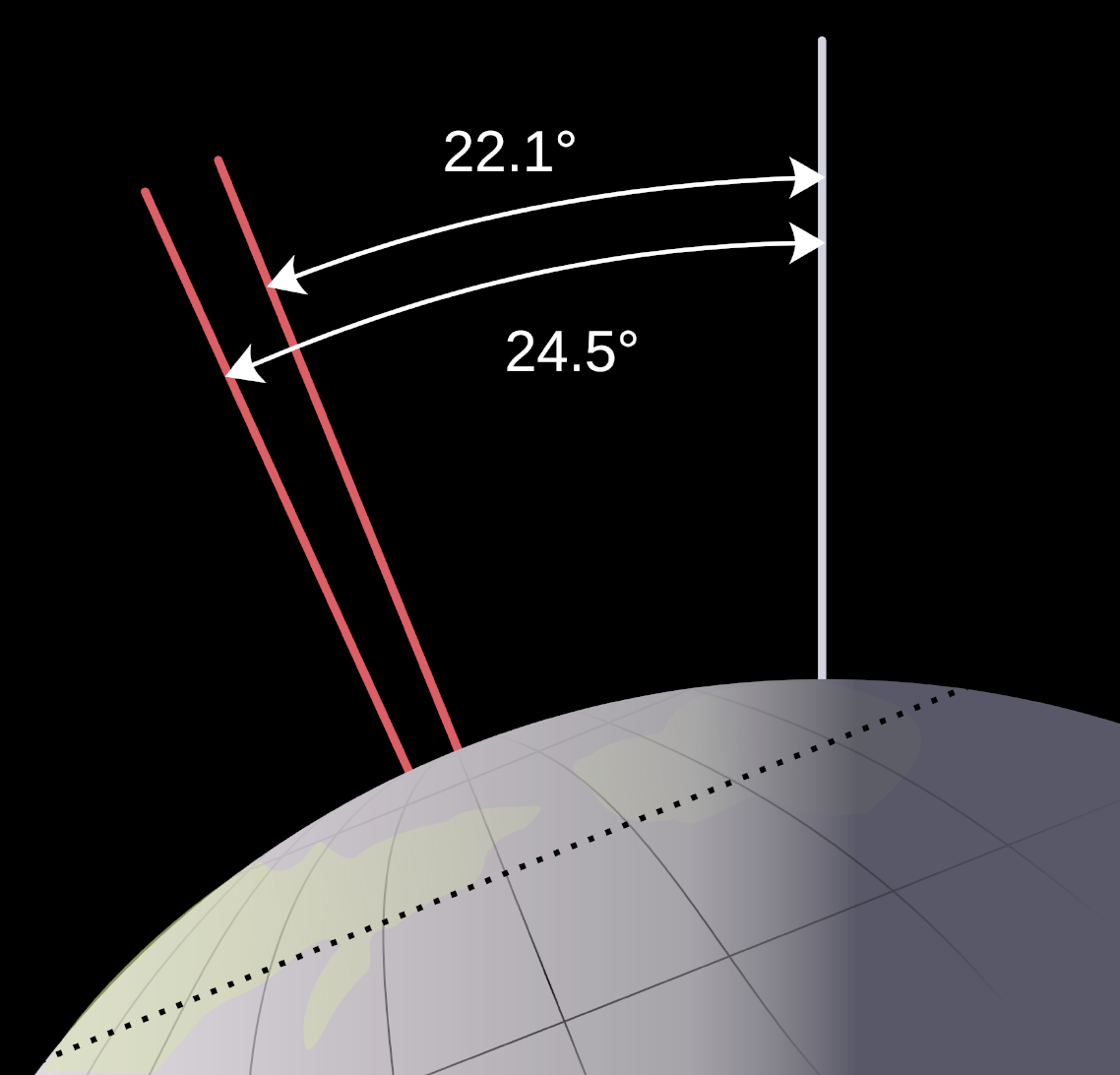
Obliquity is the tilt of the Earth on its axis relative to the orbital plane. Obliquity is the reason we have seasons every year. Earth's moderate tilt is what gives us a nice warm equator and relatively equal exposure to cool and warm seasons. For comparison, Uranus has an axial tilt of 97 degrees. [ⅺ] Its equator would experience days/nights that lasted much longer than on Earth. Its poles would each experience only a single day and a single night a year.
Rotation in Zero Gravity
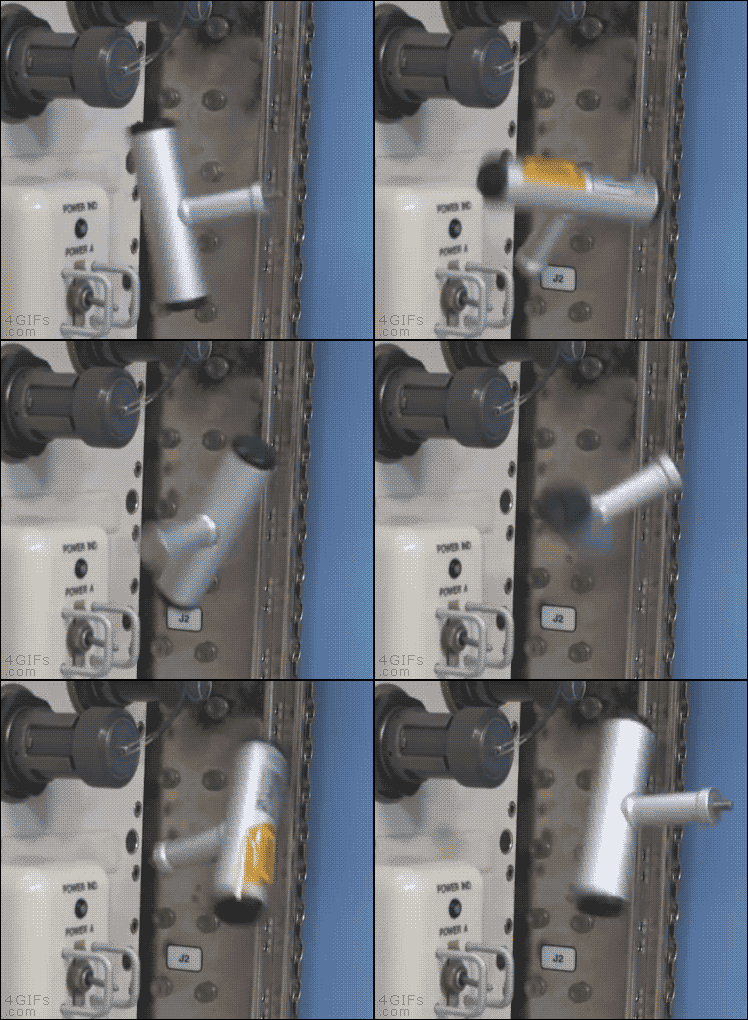
Rotation in space is a strange phenomenon. While planets can be subject to the same force in their orbit, fortunately for us Earth is exempt from this due to the presence of our liquid oceans which essentially dampen the effect. The effect does occur on Earth in relation to its magnetic poles, however.
Precession
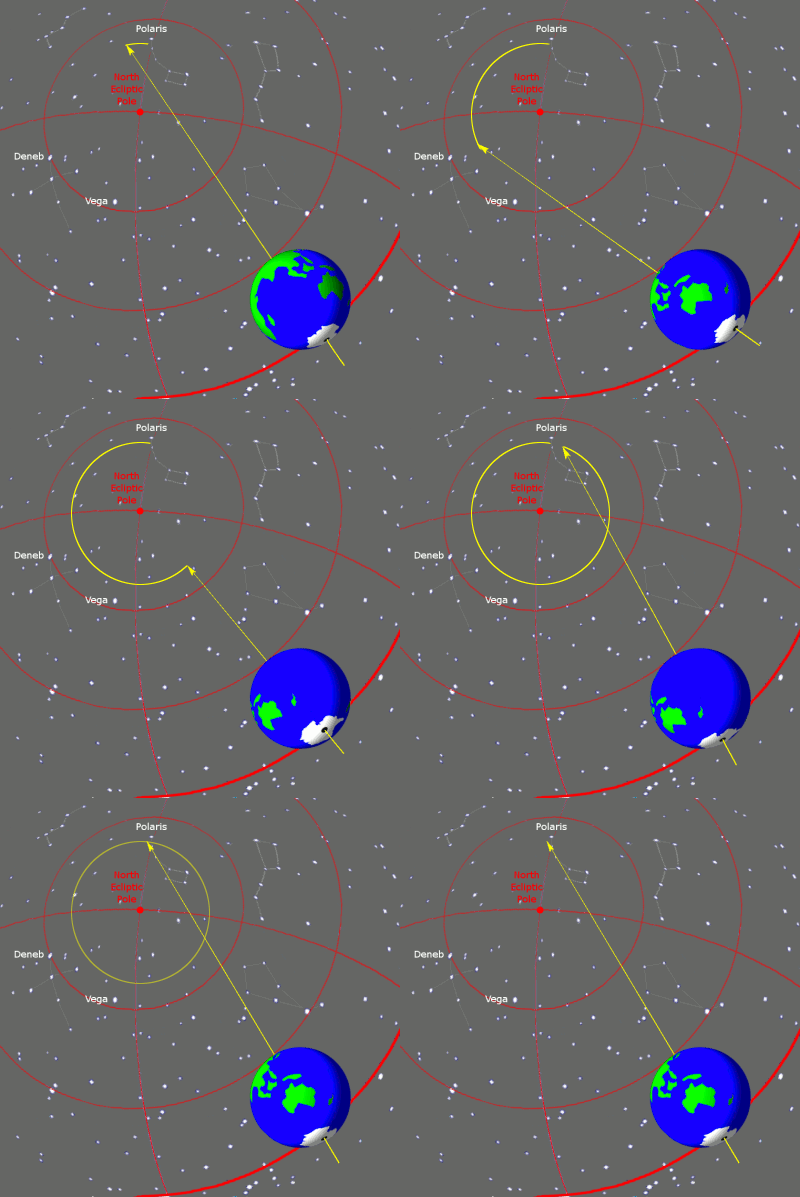
Precession is related to obliquity. Earth revolves on a tilted axis that continuously "ticks" back and forth (obliquity). As it does so, it rotates like a gyroscope so that the direction of "due north" traces out a circle upon the celestial dome - over long periods, the star we refer to as the "North Star" changes. The change is hardly perceptible within a single lifetime. A full revolution spans 26,000 years. Precession plays an important role in regulating Earth's climate. [ⅹⅳ]
Understanding the Present
For modern researchers to begin forming a hypothesis about climate change and the transition from greenhouse to ice periods, the past offers the best model for comparison. In considering our current climate and what may lie in Earth's immediate future, it may be useful to understand how we entered the current ice age. From the start, we can be assured that our current climate is a temporary phenomenon. At present, Earth is in a period of unusually moderate temperature and uncharacteristic stability - the result of our residing in an inter-stadial period in the Cenozoic ice age. Earth has been transitioning between active glaciation and inter-stadial periods of warmth for around 34 million years. [ⅹⅹⅴ] Prior to this, Earth was in a greenhouse climate, free of long-term freezing across the planet (including the poles). In exploring what may have caused the shift in the distant past, we may hope to gain some insight into our future.
Global Mass Extinction
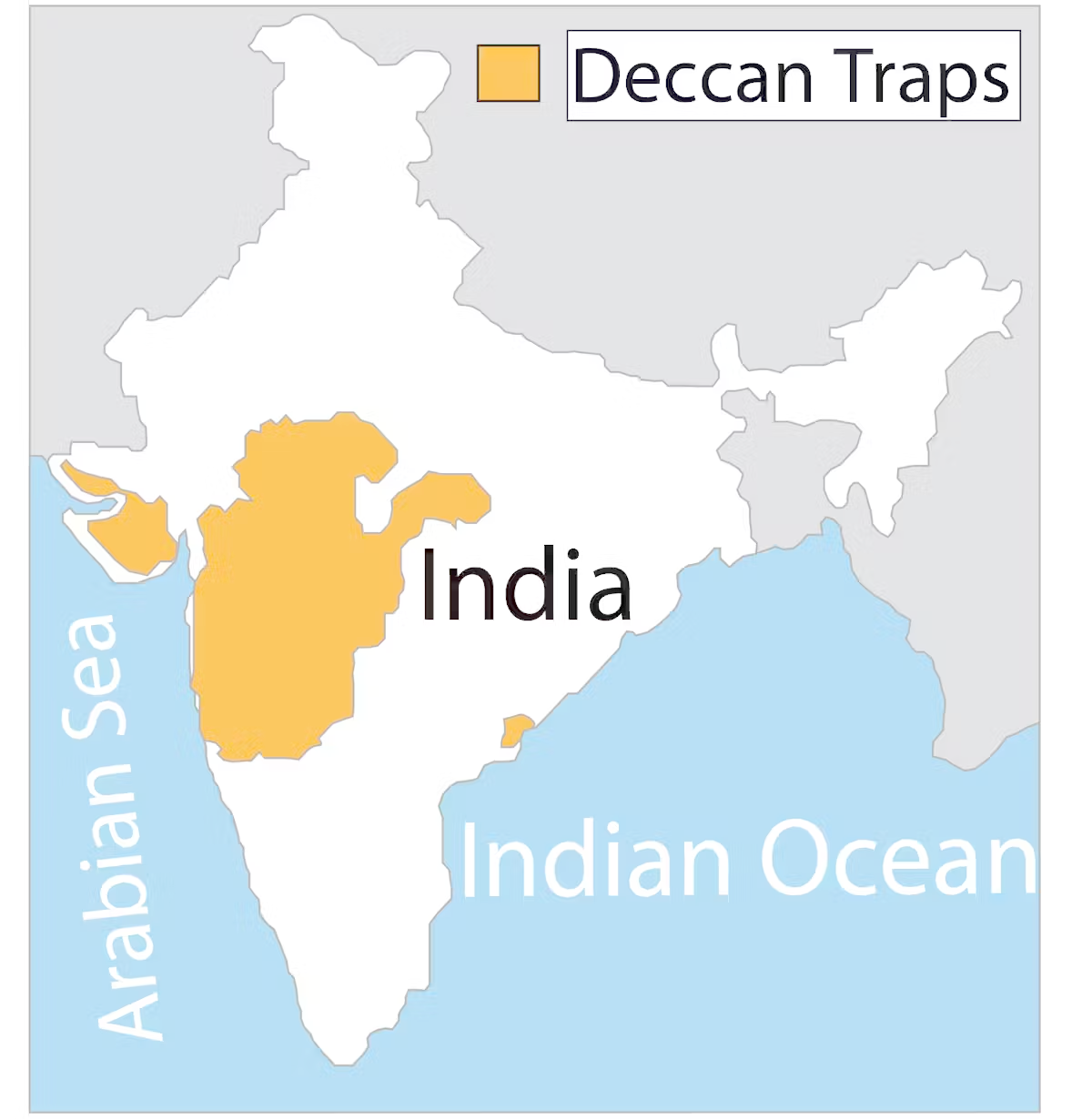
The likely cause of our current climate can be found long ago, during the Cretaceous period 66 million years ago. Researchers disagree about a single cause while some dismiss the notion of a sole explanation. What we can be certain of is that around 66 million years ago, Earth suffered cataclysmic loss of life. The Shiva crater event is dated at 66 million years. If it truly is an impact crater, it would be the largest crater on Earth. [ⅹⅹⅶ] Some scientists argue that the Shiva crater isn't a crater at all - asserting instead that the submerged trenches are naturally occurring. Others hypothesize that the Shiva crater impact gave rise to the nearby Deccan Traps. The Deccan Traps are home to one of the largest volcanic structures on Earth: An enormous shield volcano. During the end of the Cretaceous period, massive volcanic eruptions released sulfur dioxide into the atmosphere. These eruptions caused the Earth's temperature to drop 3.6 degrees fahrenheit. According to some researchers, this event was soley responsible for the extinction of the dinosaurs and our transition into the ice age of the present. Scientific consensus points in a slightly different direction. [ⅹⅹⅷ]
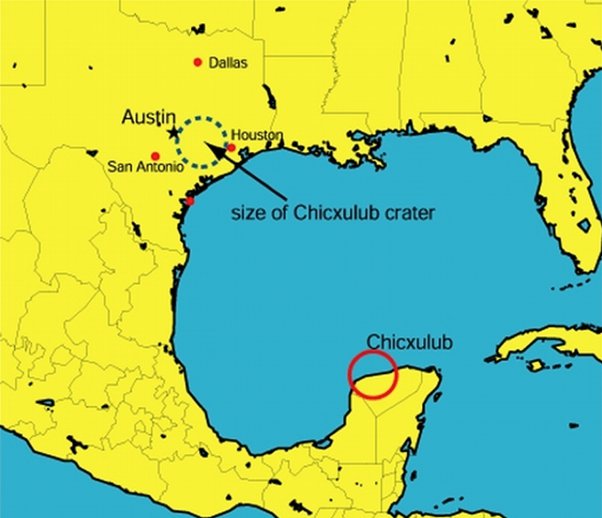
The Chicxulub crater is what remains beneath the Yucatan Peninsula in Mexico of a large asteroidal impact; remnants of an event that took place 66 millions years ago. The crater is the second largest confirmed impact of its type on Earth. Many believe that following the event, dust and debris were thrown high into the atmosphere at an unfathomable scale. Some hypothesize that the result of the collision was an "impact winter" on Earth. An impact winter occurs when dust strewn into the atmosphere to such an extent that sunlight is unable to reach Earth's surface and warm the planet. Such an event would inevitably result in rapid climate shift - many believe this to be the cause of our last global climate transition. [ⅹⅹⅹ]
The Greenhouse Effect: Carbon, Dust, Ash, and Soot
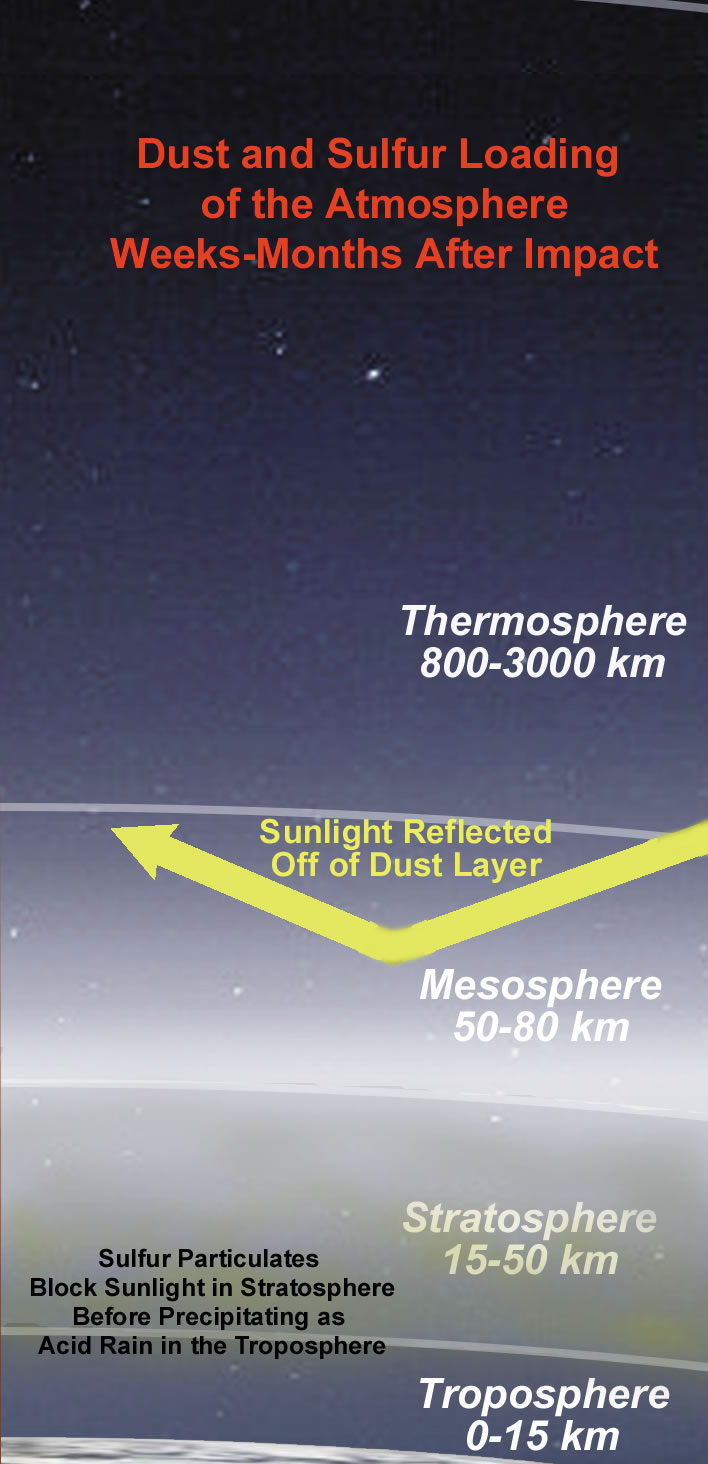
The atmosphere filters light moving in both directions - as it move towards the Earth, and in as it travels back into space after being reflected off the surface. Different particles filter light differently. In general, particles in Earth's atmosphere reflect or scatter high frequency light (radiation) and bounce it back into space before it reaches Earth - this is a part of what makes life on Earth possible. The higher the frequency of light moving through the atmosphere, the more heavily strongly it's reflected. Once light reaches the Earth's surface it can either be reflected back into the atmosphere or absorbed as heat. Infrared (IR) light oscillates at a slightly lower frequency than visible light. IR on its way back out into space is subject to a second pass filtering by the atmosphere. Not all gasses in the atmosphere filter infrared to the same degree. Many gasses allow IR to pass back into space, untouched. Some gasses (Greenhouse gasses) filter infrared heat very heavily, trapping it within the atmosphere of Earth where it is dispersed. As a general rule, gasses which are the by-product of burning (soot, smoke, carbon) are extremely insular - blocking the movement of infrared through the atmosphere. Water vapor is also very good at trapping heat within the atmosphere.
An important aspect to consider is that all matter on Earth exists in a "state". The "land" or planet's surface is in "solid state". Under the right (or wrong) set of circumstances, solid state matter can transition into a different state: liquid or gas. As a rule, heating solid matter causes it to become liquid (like when a glacier melts), or to become a gas (like when water evaporates). When the planet experiences volcanic activity, it's helpful to conceptualize the state change that is occurring. Solid matter through conflagration is being converted to gas (smoke, soot, and dust) and liquid (magma or lava) - solid state carbon which had no effect on Earth's climate is converted into carbon in the atmosphere, a greenhouse gas. When large quantities of greenhouse gasses are released into the atmosphere at once, the planet may undergo rapid cooling. The effects of a global-scale event such as am asteroidal impact on climate are not entirely understood. Fallout from an asteroid impact will occur across the planet for (possible millions) of years after the initial collision.