A Perfect Storm
The Glaciation of the Poles
34 million years ago, Earth entered our current ice age - called the "Cenozoic". Glaciation gained a foothold in Antarctica, freezing the entire continent. Prior to the Cenozoic, Australia and South America were joined to Antarctica.[ⅹⅴ]An immediate consequence of glaciation was that the two adjoining continents were split and dispersed northward. Between Antarctica and South America, the "Drake Passage" opened up. Australia's northward drifting formed the "Tasmanian Passage" The new passages allowed oceanic currents to surround the Antarctic continent, acting as a connecting current between previously isolated Atlantic, Pacific, and Indian oceans. The new encircling current isolated the newly glaciated Antarctia - ensuring that its freezing temperatures would be a long-term characteristic.[ⅹⅵ]

As South America drifts north, volcanic activity is triggered along the fault line connecting it with North America. An increase in seismic activity in time produces a series of new islands which eventually bridges together the two continents. The final formation of the Isthmus of Panama takes place around 3 million years before present. While the Istmus plays a pivotal role in the ecology of the Americas, even more significant were the resulting changes in oceanic current due to narrowing the once open ocean. [ⅹⅷ]
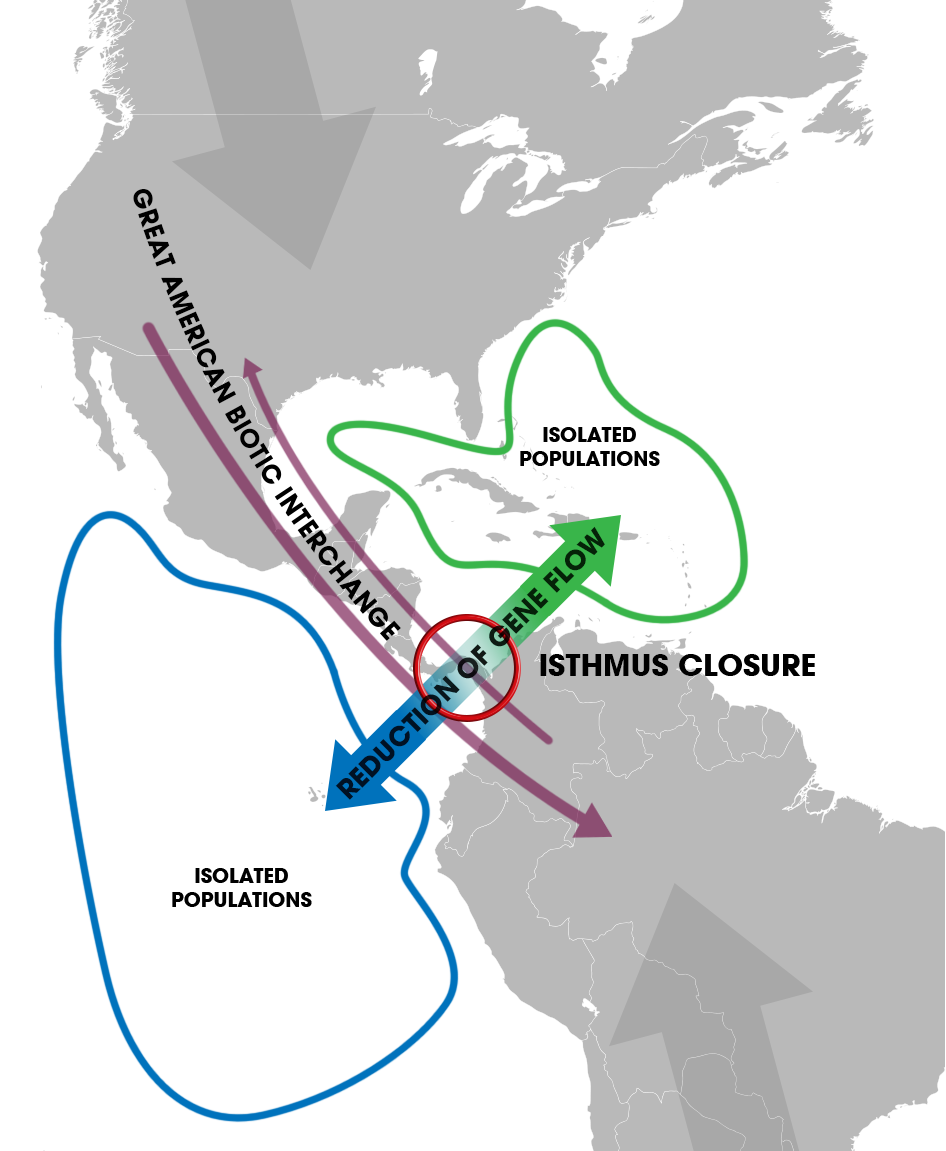
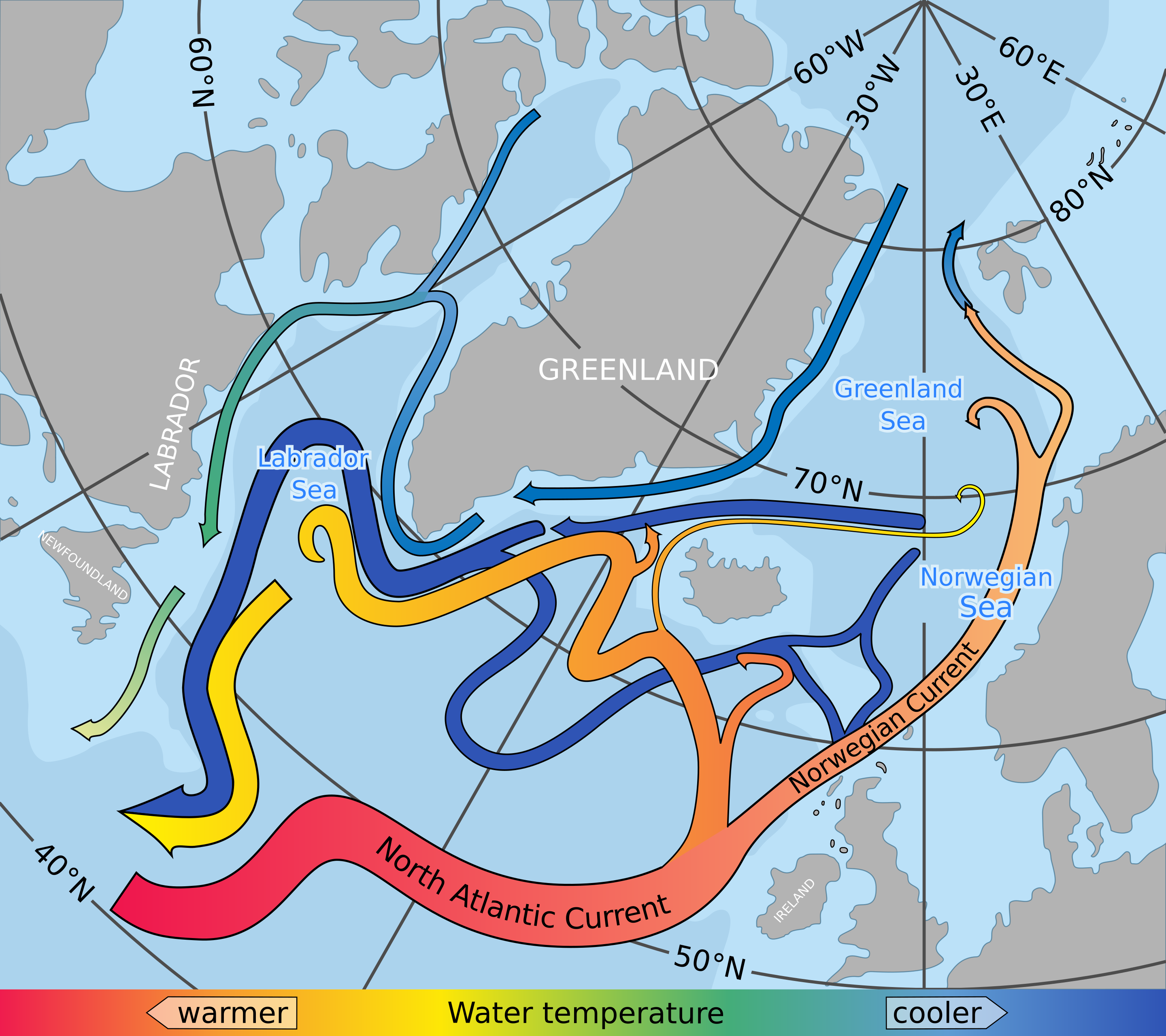
The formation of the Isthmus of Panama radically transformed Earth's climate. It introduced the "Gulf Stream" to the Atlantic Ocean. Warm water originating from Panama is directed east, to the eastern coast of North America, then north. The warm water current flows north around Greenland, before branching off into the coast of north-western Europe. Warm water intoduced into the water cycle near the north pole has a reverse effect on the overall climate. The end result of the warm current in the northern hemisphere is that it cooled the area significantly. [ⅹⅹ]
In Greater Context
With some foundational information laid out, the bigger picture becomes easier to understand. All planets, by necessity are either in a greenhouse or ice age. Earth entered the current ice age 34 million years ago, following an asteroidal impact. Glaciation began in Antarctica, which fragmented the super continent remnant of Pangea into South America and Australia. Antarctica became permanently affixed to the South Pole. Changes in continental distribution altered the oceanic current. Around 4 million years ago, the northern hemisphere began experiencing glaciation during stadial periods. Glaciation in the north first appeared in Greenland.
As stadial periods began producing more glaciers throughout the northern hemisphere, we entered a period called the Quaternary, which we are in today. The Quaternary began 2.58 million years ago. The Quaternary period is further sub-divided into the Pleistocene and the Holocene. The Pleistocene stretches the vast majority of the timeline (2.58 MYE - 11.7k MYE), while the Holocene only corresponds to the last 11.7k MYE - the end of the last stadial period.[ⅹⅻ]
The Pleistocene period, like any other ice age, is divided up into stadials (active glaciation) and interstadials (de-glaciation). The stadial-interstadial cycles within the Pleistocene have shown remarkable regularity in their periodicity. In nearly every instance, the stadial period occurs on a timescale of around 100,000 years - with short stadials at around 40,000 years occurring every so often. The interstadial period, in every instance, lasts around 10,000 - 15,000 years.[ⅹⅹⅲ]While there is some scholarly debate about causality in specific instances, academia seems to look to the Milankovitch cycles for an explanation. There does seem to be a rather suspicious correlation: Earth's orbital incline has a periodicity of 100k years. Earth's eccentricity in orbit around the Sun occurs at time intervals of 95k and 125k years. Others suspect precession to be a lone explanation.
The Pleistocene begins with the glaciation of the northern hemisphere but around the same time (2.58 MYE) Earth simultaneously experienced another change of equal importance. The beginning of the Pleistocene marks the first emergence of human ancestors on Earth.[ⅹⅹ ⅳ]It seems that throughout our development as a species, we endured these conditions. It's a bit of a misnomer - popular media depicts "the ice age" as a single event. Similarly, we often describe "humanity" as beginning at the end of the ice age. As it turns out, humans have seen dozens of these cycles, and it's possible that some cultural memory remains.