Genus Homo
Overview
While anatomically modern humans are catagorized as Homo Sapiens it's clear that we share significant overlap with our most recent ancestral relatives. The cross-species overlap isn't confined to genetic inheritance. The fossil record indicates a cultural overlap. Throughout the Paleolithic, the various species of Homo which evolved independently from one another appear to have been in communication. Thus, to obtain an accurate picture of human culture in its infancy it isn't sufficient to begin with Homo Sapiens in Africa. A complete explanation can only be realized by considering the pre-existing culture that Homo Sapiens migrated into.
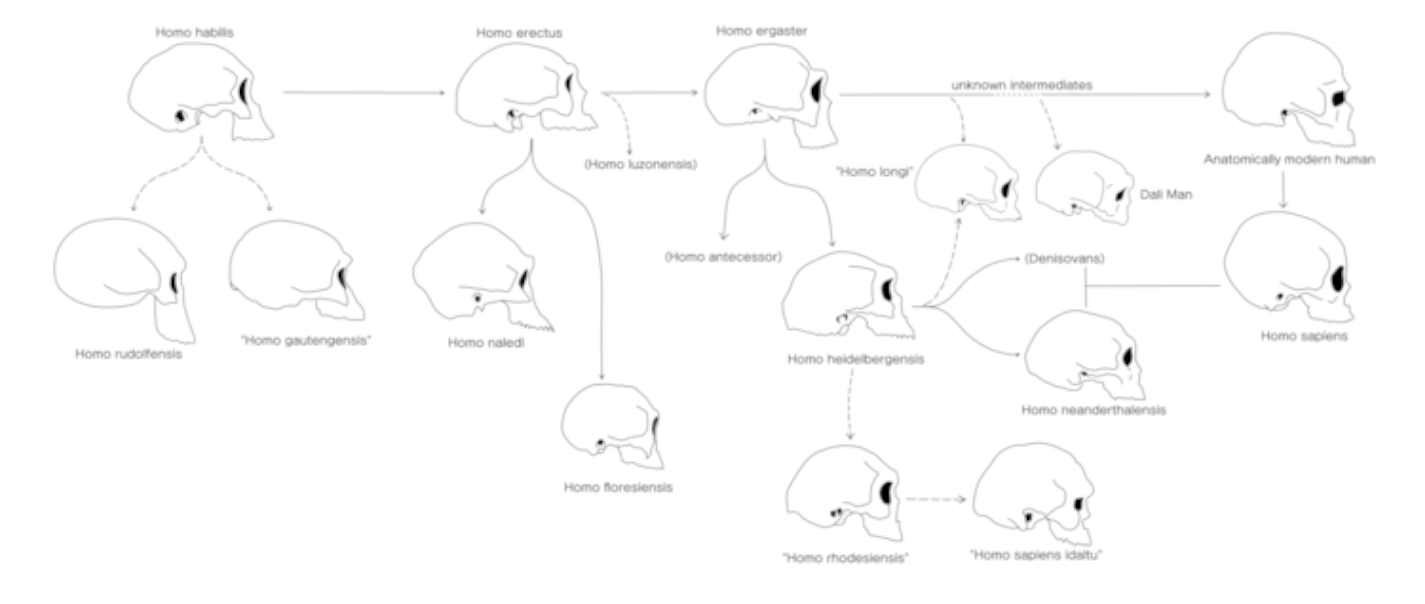
The Evolution of Genus: Homo
Species
Chronology
Industry
Height
Characteristics
Habilis[i]
2.4 - 1.4Mil bp
Oldowan[i]
3ft. 4in.
First Tools
Rudolfensis[i]
1.9 - 1.8Mil bp.
Oldowan[i]
-
Stone Tools
Erectus[i]
1.9Mil - 110k bp.
Oldowan - Acheulean[i]
4ft. 9in. - 6ft.
Human Proportions, Axes/Cleavers, Fire
Heidelbergensis[i]
700K - 200K bp.
Late Acheulean[i]
5ft. 9in.
Cold Climate, Rock Shelters, Large Game, Fire, Ritual, Axes
Floresiensis[i]
100K - 50K bp.
-
3ft. 6in.
Stone Tools, Large Game
Neanderthalensis[i]
400K - 40K bp.
Mousterian
5ft. 5in.
Stone-Flake tools, Fire, Shelters, Clothing, Large Game, Art/Jewellry, Fishing, Sewing, Burial
Sapiens[i]
300K bp. - Present
-
-
Bow and Arrow, Spears, Sewing, Husbandry, Agriculture
Homo Erectus
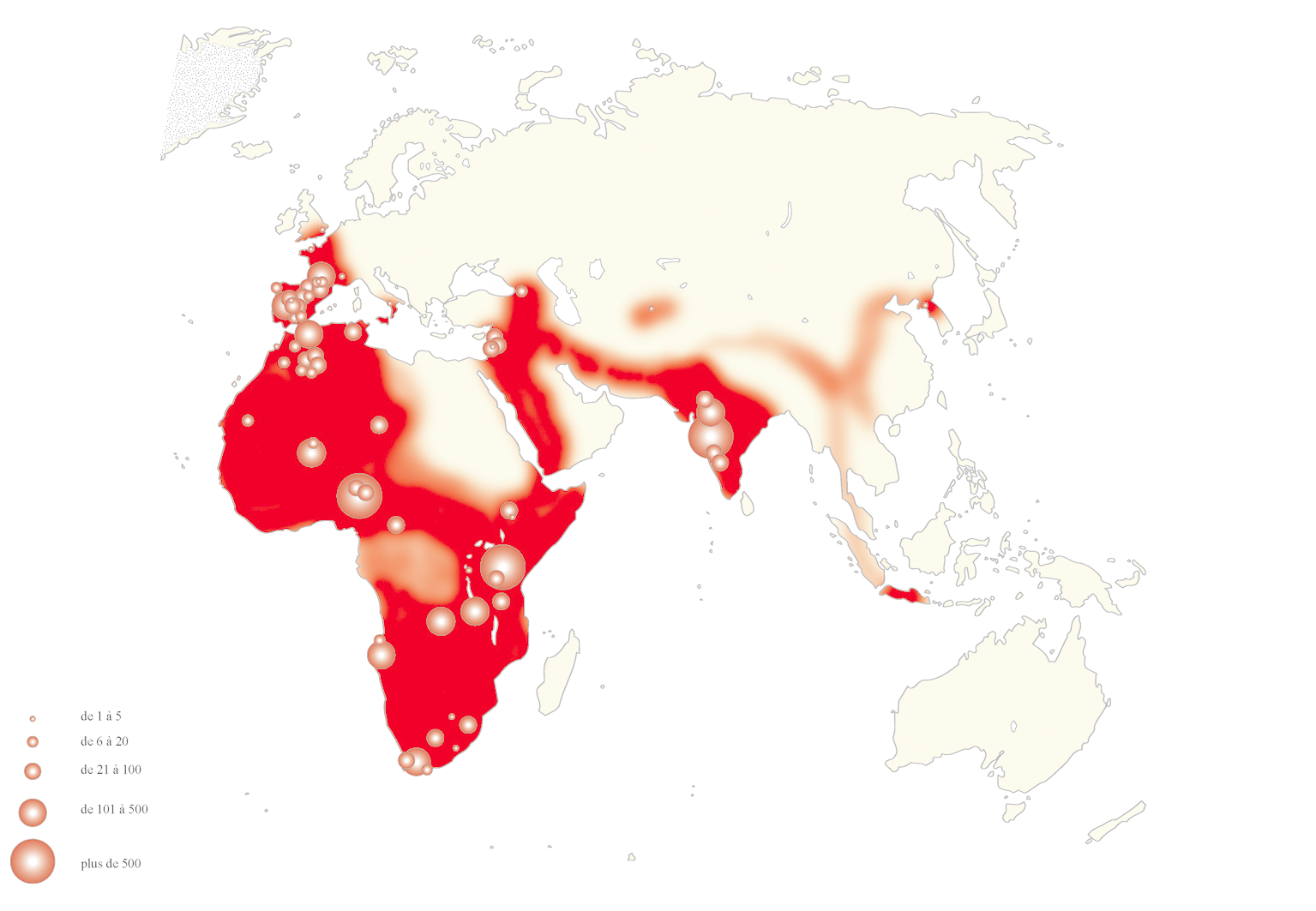
Homo Erectus first appears in the fossil record around 2 millions years ago. The belonged to the Acheulean stone tool industry. Their territory stretched from Africa to East Asia. The species appears to have had a substantial population until around 100k MYE. The Acheulean industry appear to be the first human ancestor capable of building fire. They made stone cleavers and cutting tools. They were arguably capable of seafaring. Subject to some debate among archaeologists is the extent to which they communicated verbally using language. They were the first of the members of genus Homo to possess human proportions - long legs and shorter arms, indicating an evolutionary commitment to walking upright for the first time.
Homo Heidelbergensus
Homo Heidelbergensus is a direct ancestor of Homo Erectus. Their approximate habitation of Earth spanned from 800k - 200k years before present. Most hypotheses assert that Homo Heidelbergensus split roughly into two branches. The European branch went on to become Homo Neanderthalensis while the African branch evolved into Homo Sapien.
Homo Neanderthalensis
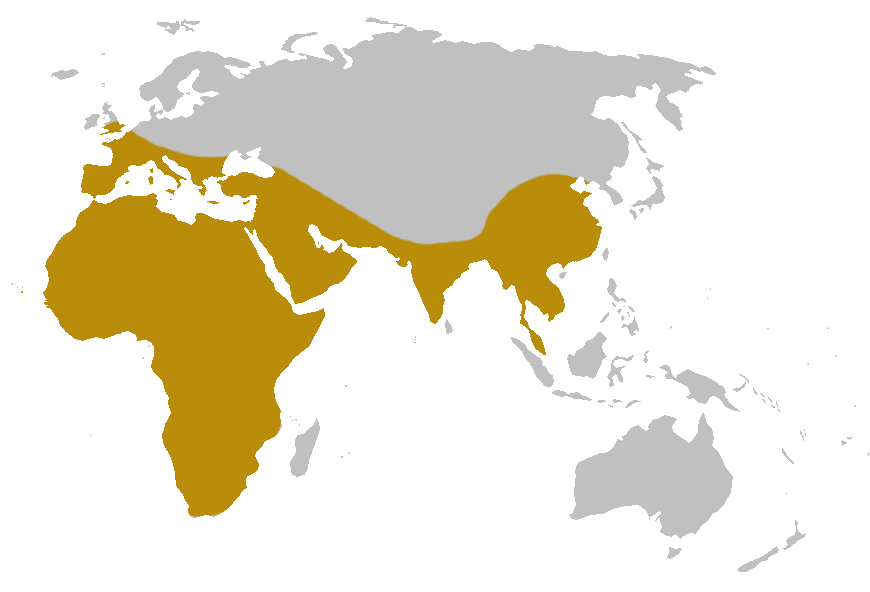
Neanderthal belonged to the Mousterian industry which spanned the Eurasian continent. Unlike other species, the fossil record indicates no presence in Africa. Settlement seems to extend as far south as present day Israel. Neanderthal had the most advanced culture of all pre-human ancestors. They wore clothing, made jewelry, created art, made advanced stone tools, and most likely practiced religion. Their presence began around 400,000 years before present and ended abruptly 40,000 years ago. Most likely they interbred with Homo Sapiens as they entered Europe from Africa.
Homo Sapiens
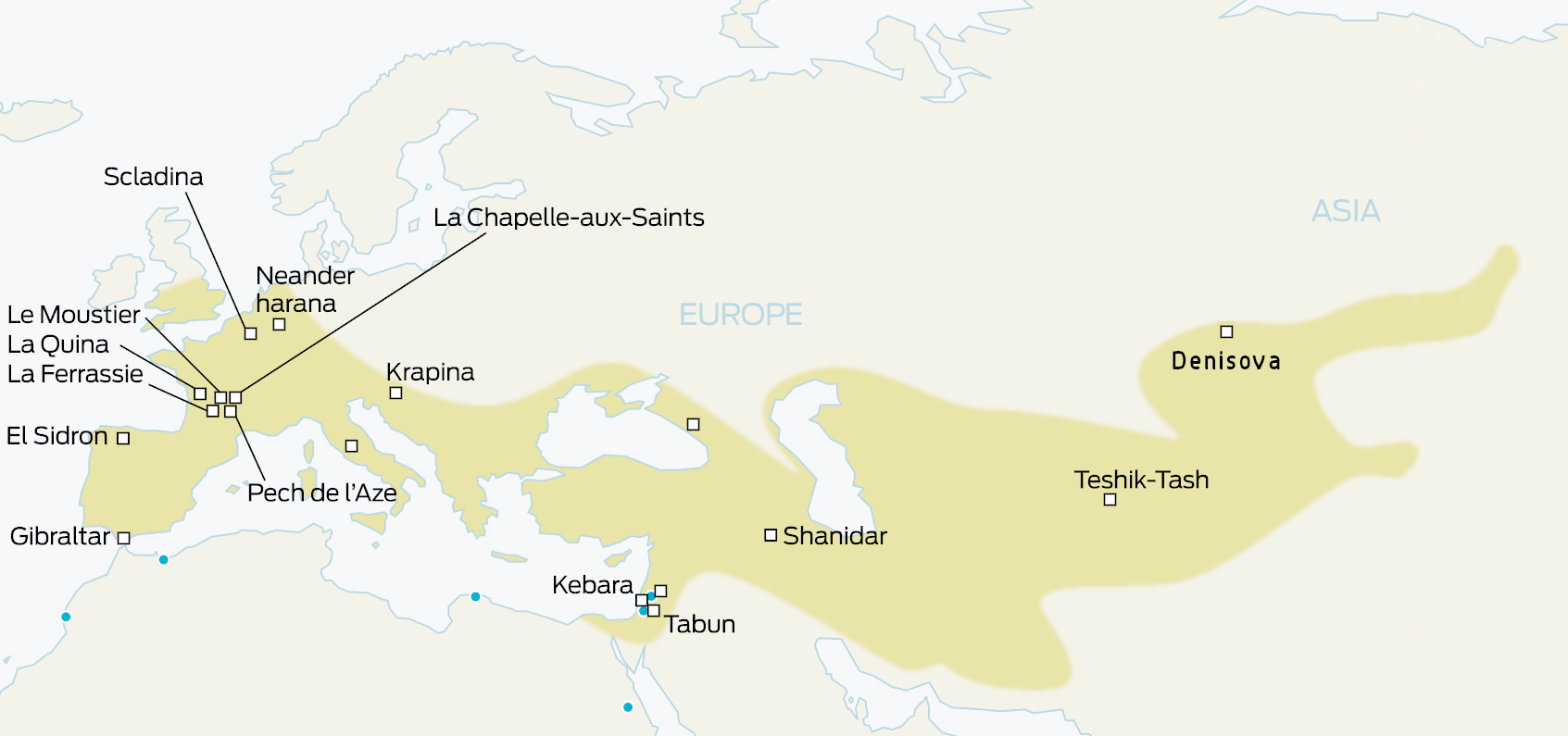
Homo Sapiens first appear in the fossil record 300k years ago. They evolved in Africa and spread across the world in a series of migrations. Wherever they went, they altogether replaced their predecessors culturally and genetically over the course of time. They possessed all the technology of previous cultures. However, where previous species had developed simple stone tools as the pinnacle of their progress, Homo Sapiens from a very early period set themselves apart in their capacity for innovation. As they migrated, they interbred with their genetic ancestors. This may have the cause for their eventual distinction, or may have only played a small role.
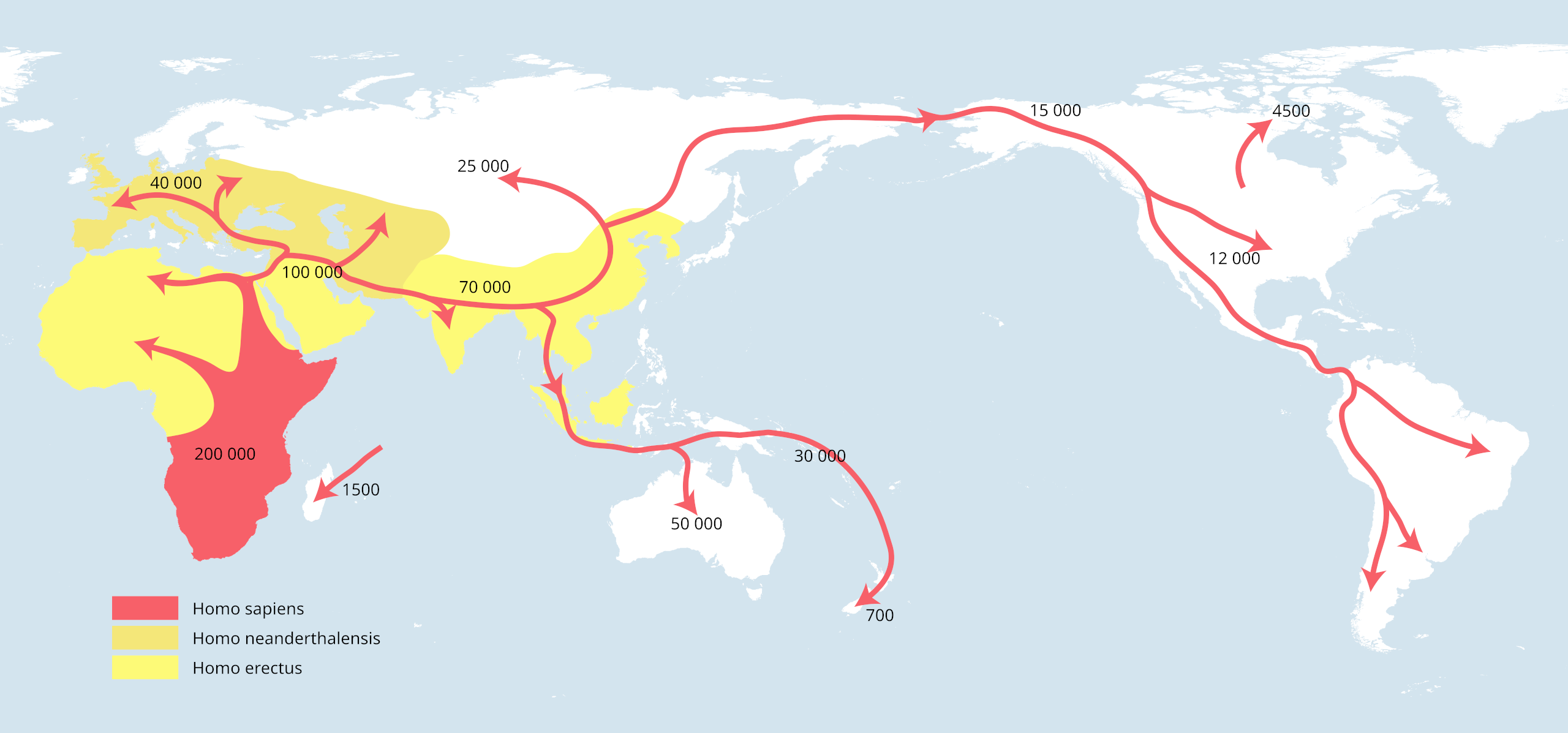
Cross-Species Transmission
In every case, modern man's predecessor possesses at least a rudimentary culture, often referred to by archaeologists as "industry" in its early stages. Some evolutionary biologists argue that the cognitive capacity to construct tools goes hand in hand with language formation.[i]If their hypothesis holds true, that could theoretically push the beginning of spoken language back a staggering 2.4 million years. In the case of the more primitive members of genus homo from the Oldowan industry, it seems unlikely that they have contributed to our modern vocabulary in any significant way. While they may have settled in a region that shared an overlap with more modern ancestors, their anatomical characteristics likely isolated them from the larger Erectus culturally. Members from the Acheulean onward however, likely played an important role in the formation of early speech and culture.
Neanderthal in particular seems to be greatly overlooked in their role. From the evidence currently available, it seems Neanderthal were matching Homo Sapiens 1:1 in terms of technological and societal development. The two shared overlapping territory - particularly in Europe. Furthermore, the two species were apparently interbreeding. Many modern humans to this day posses Neanderthal DNA. It's plausible that a cross-species transmission of DNA, technology, and language may have taken place among earlier proto-human ancestors with overlapping territory, culture, and anatomy to the earliest stages of the Acheulean industry (1.9 Million Years Before Present). Obviously, this is true genetically as modern human is after all the result of precisely this sort of relationship. When considering the implications of such a transmission culturally or linguistically however, our conceptual model of early history can easily be upturned.
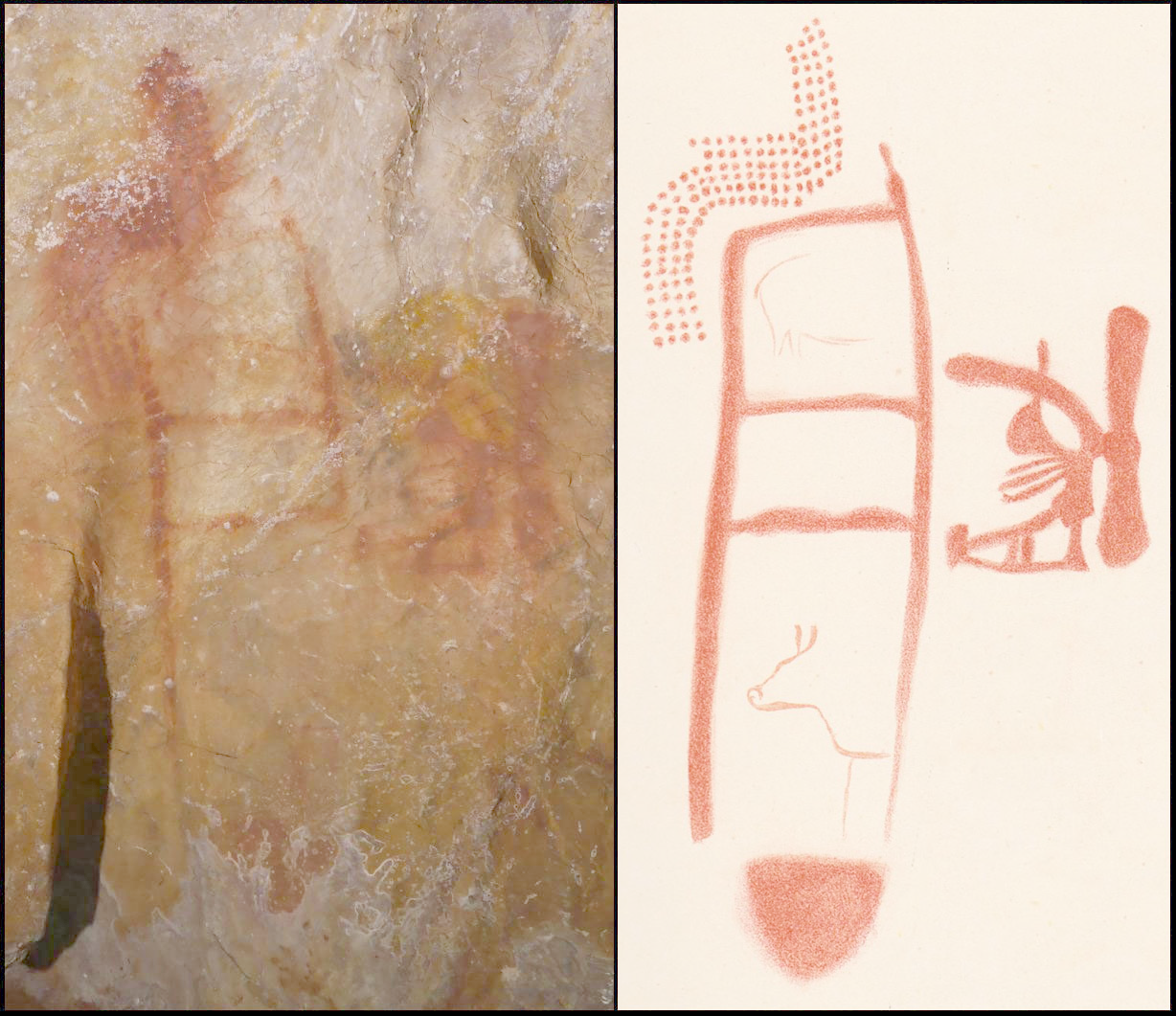
At the very least, early Homo Sapiens did endure the presence of several pre-human cultures in their immediate environment. Migration out of Africa didn't take place within an unoccupied landscape. Neanderthal disappeared from Earth very suddenly around 40K years before present and modern researchers aren't certain about why this mass extinction took place. One of the prevailing theories is that they were simply absorbed into the larger gene pool of Homo Sapiens as they expanded north into Europe.[i]
This issue alone makes it difficult to accurately talk about human origins - culturally, genetically, or linguistically. Based on the information available to us, it seems less likely that these things emerged instantaneously along with man, from zero to one. Instead, it seems a sort of "proto-cultural" period occurred - possibly over the course of hundreds of thousands of years. During this time, it's likely that the foundation for the things we regard as strictly "human phenomenon" (language and culture) was laid out in Africa, Europe, and Asia prior to modern humans' arrival. Our Homo Sapien forefathers did not "invent the wheel" - they only improved upon it exponentially. This fact may easily be overlooked. The cultural revolution that took place at the dawn of "civilization" caused such a dramatic transformation in social structure that it may easily be mistaken as a qualitatively different thing when contrasted with the the ones that preceded it, but this is almost certainly not the case.