The Human Factor
Carbon Emissions
There are many factors to take into account when approximating Earth's climate in the future. The calculation is greatly complicated by humanities influence on the environment. As far as we know, no other species has ever had the ability to interfere with the natural periodicity of the ice age, or produce greenhouse gasses to any measurable extent. Without human interference, we would likely continue in our path within the Cenozoic ice age. Earth is due to return into a long stadial period lasting around 100k years in the relatively near future. Since the beginning of the Industrial Age however, mankind has been steadily increasing in its carbon emissions. Carbon greatly accelerates the greenhouse effect which may have catastrophic consequences for the atmosphere over the coming decades.
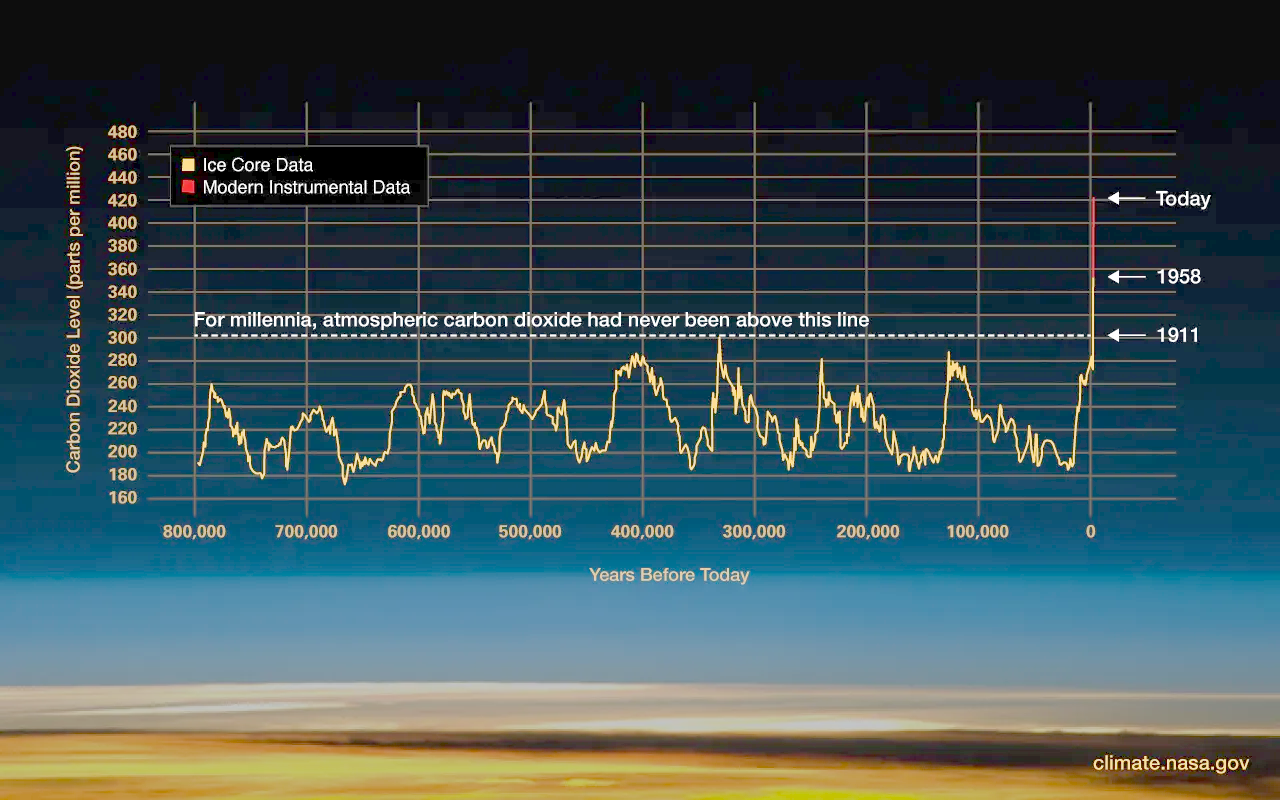
Global warming has been a hot topic politically the last several decades. It seems that mankind is now capable of interfering in the timeline put forward by nature to determine our fate. Ironically, rather than choose to use our technological prowess to circumvent our seemingly unavoidable apocalypse, we may be shortening it. Carbon emission is a chemical by-product of the combustion engine - the capstone of industrialization. Chemical energy is converted into mechanical energy through controlled combustion. Gas state carbon is released just as it is in a traditional fire - as smoke.
We've come to rely heavily on combusion engines, and with our booming population our collective output is beginning to have an effect on the atmosphere. Global temperature is steadily increasing. Glaciers around the world are melting. Sea-levels are rising as a consequence. While the short-term effects of glacial recession and rising sea-levels may be trivial, long-term repercussions may prove to be life altering. There are several glaciated regions on Earth in our present inter-stadial period. These areas remain frozen throughout the duration of inter-stadial periods. During winter months, they expand. During the summer months they generally recede slightly. They are measured by researchers by recording the maximum extent of their expansion during the winter, and recession during the summer.
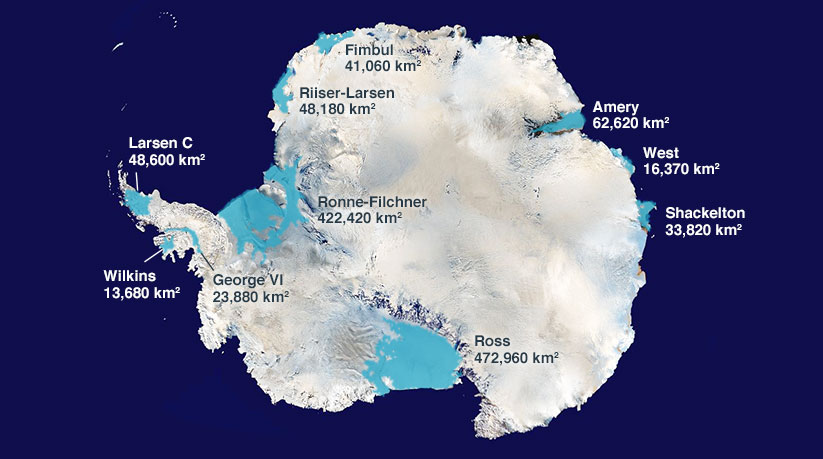
Antarctica
Antarctic Ice Flow
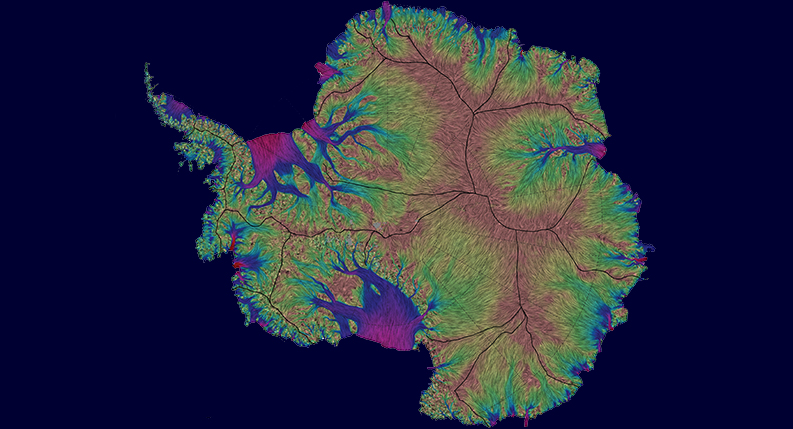
The areas of greatest movement on the Antarctic ice shelf are indicated by darker colors (red/purple). Increase in ice flow can be seen on the north and south of the continent along its western coastline. If the two large areas were to meet in the middle of the continent, the ice sheet covering the entire west coast of Antarctica could slip into the ocean. Introducing such a large glacier into the ocean would have cataclysmic effects spanning the globe.
Ice Caps on the Continents
Continental Glaciation
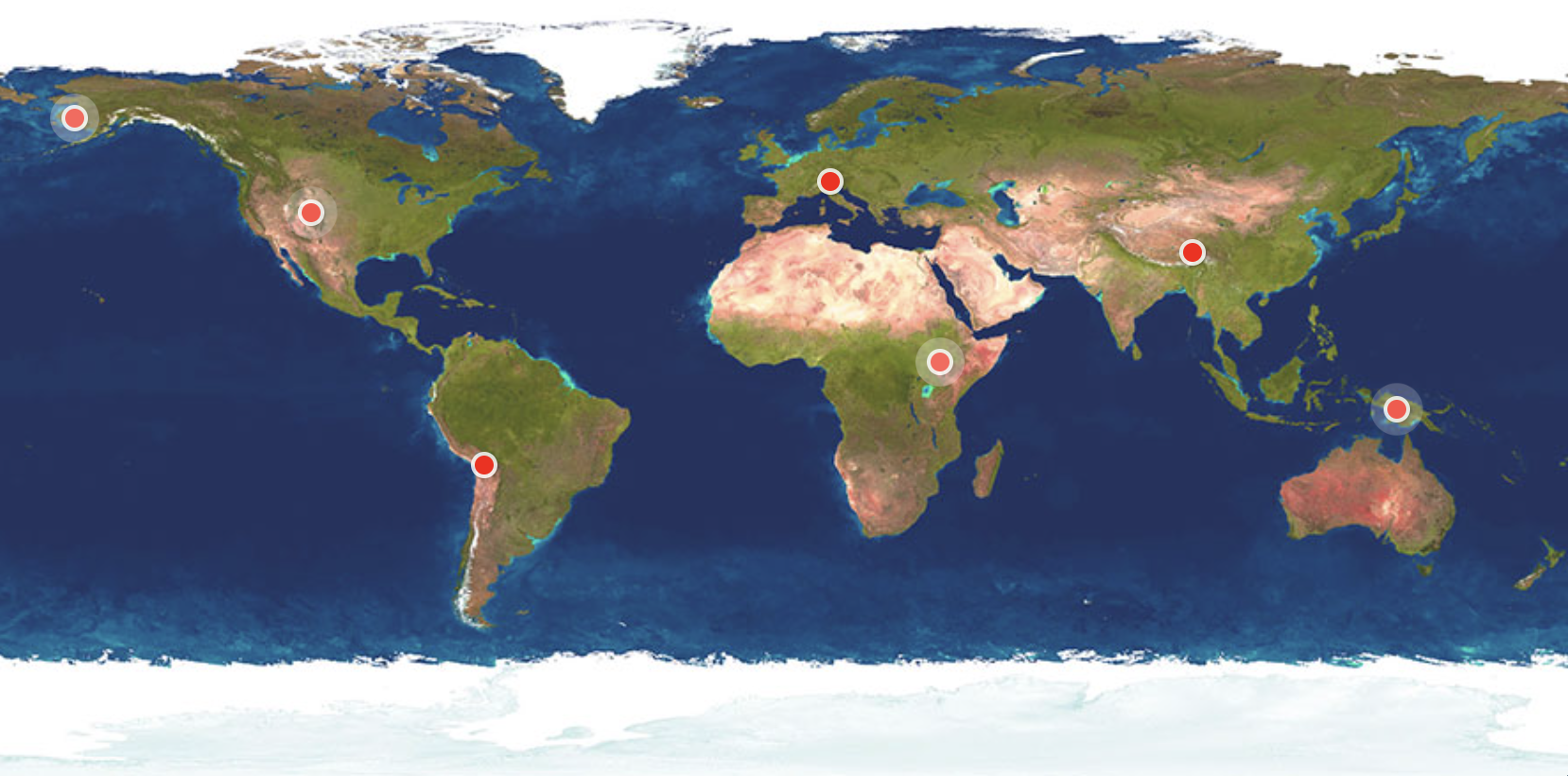
The continents are home to a series of mountaintop "ice cap" glaciers. When the larger ice shelves in the Arctic region advance during stadial periods, the ice caps found on the peaks of mountains spread to other areas. Generally, large mountain ranges form a single glacier which may then advance into adjacent regions as cooling progresses throughout the stadial. In this way, glaciers often chain together and combine with formations which were geographically separated during warmer climates.
Greenland
Greenland lies at the center of glacial formation in the northern hemisphere. The entire continent is covered by an "ice shelf", while it also features several distinct glaciers in addition to the larger sheet formation. Greenland is encircled by the Arctic Ocean (and partially by the Atlantic). Consequently it plays an important role in global climate as regional temperature is greatly influenced by oceanic conditions. Greenland has been rapidly warming since the beginning of industrialization.
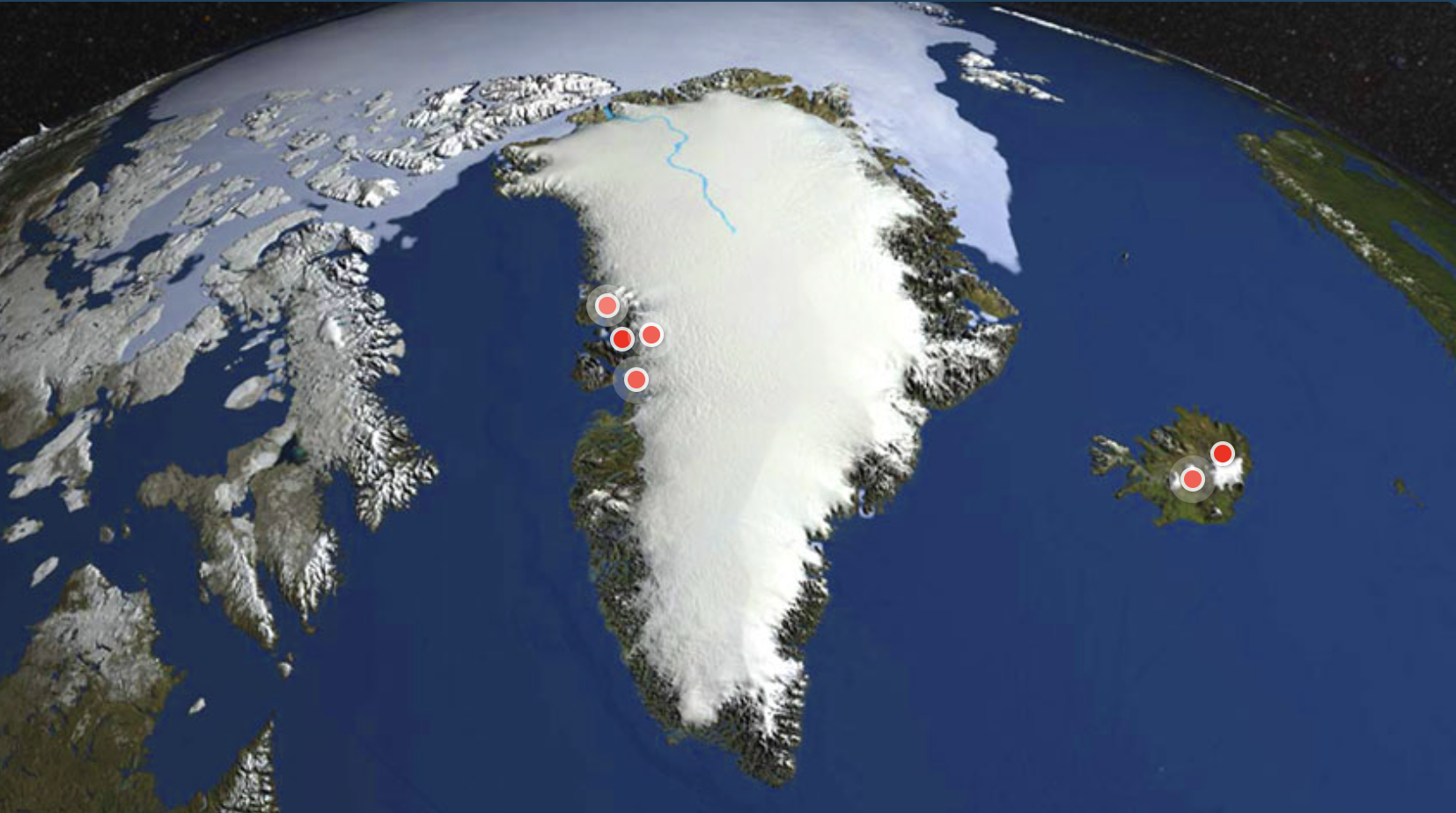
A Hypothetical Deglaciation
Sea level has risen 8-9 inches globally since 1880. This may not seem like much, but small change in sea level makes an enormous difference. 30% of the global population lives in a coastal area susceptible to rising sea level. "Nuisance Flooding" is a temporary flood that destroys entire cities, although generally doesn't result in loss of human life. Flooding of this sort has increased 300% - 900% in the last 50 years due to sea level rise.
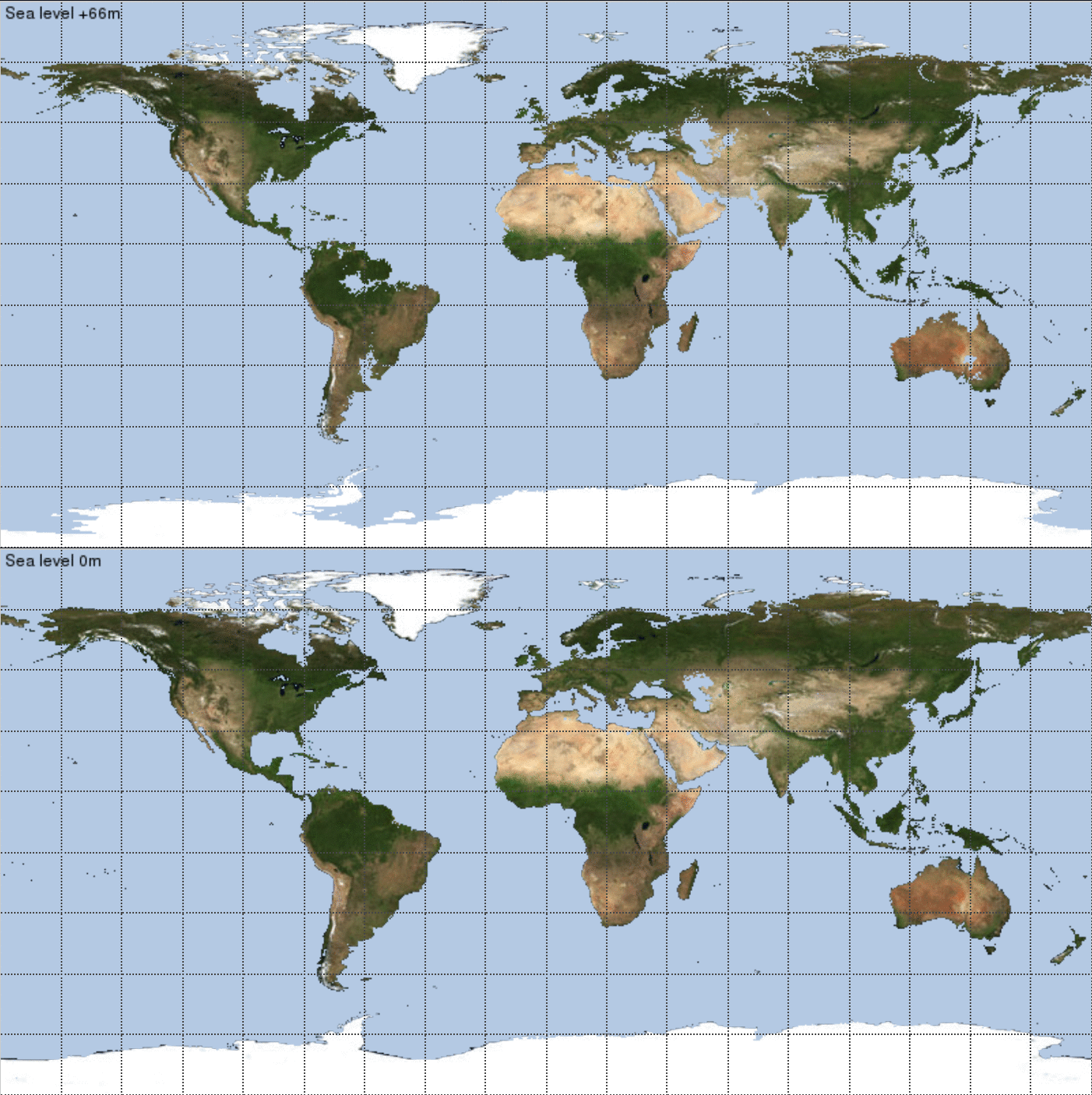
The effects of large scale deglaciation would change the face of the Earth. It's extremely difficult to predict all the outcomes, but a few things are understood. An unexpected consequence is that Earth would rotate more slowly about its axis due to the dynamic interaction of liquid water compared to solid ice. If all the ice on Earth melted, the sea level would rise 230 feet from present. In addition to the total landmass lost, the climate would enter into a greenhouse climate - the entire planet would become more moderate and warm. Greenland and Antarctica are two enormous land masses which have been covered by permafrost for many milenia. Both of these would become habitable regions. The most difficult part of the shift would be the intial coastal recession. Presently, the coastlines around the planet are the most valuable and desireable places to live. This would quickly change. The east coast of the United States would suffer particularly devistating recession - the loss of property and life is difficult to comprehend. If such a transition were to occur without our foreknowledge well in advance, the process would be terrible. Adjusting to such a dramatic global change seems incomprehensible to us at present. However, it would absolutely be conceivable for humanity to navigate the transformation with sufficient preparation and adequate planning.